
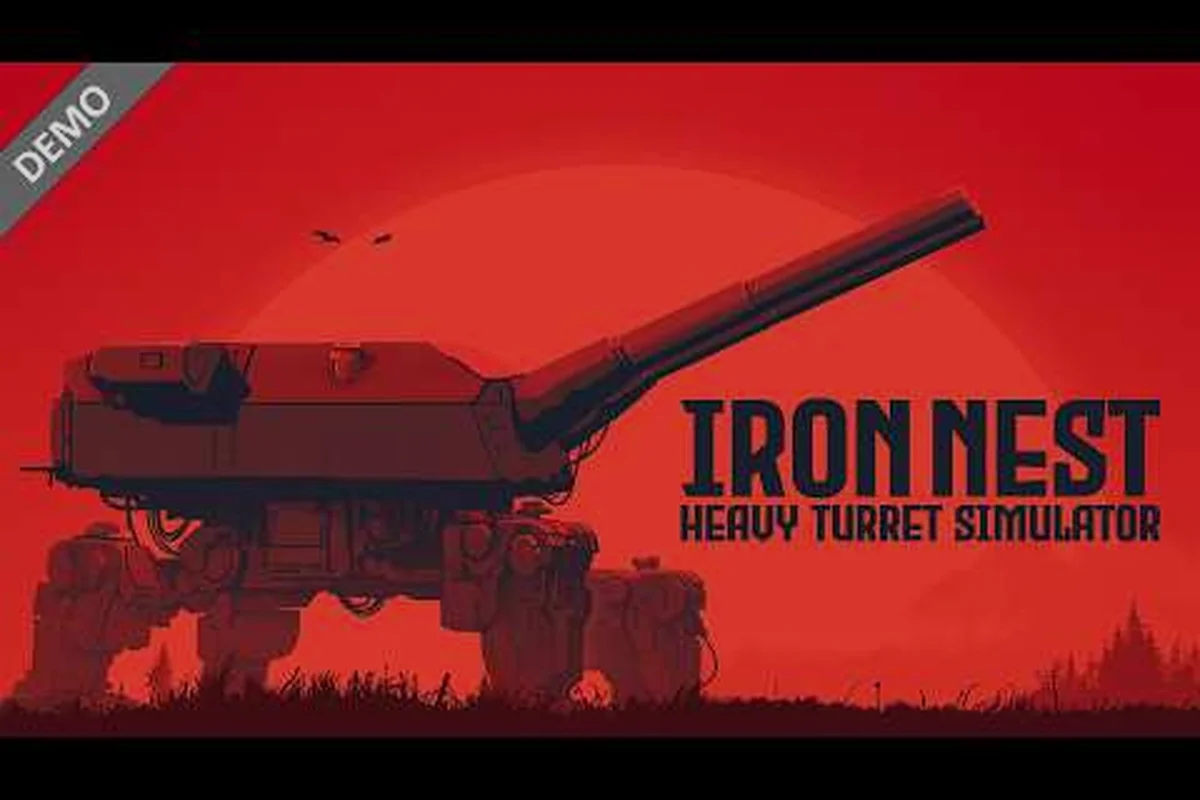
Every shell you load into the Iron Nest turret lands somewhere inside the monarchy vs republic civil war, which is why picking an allegiance matters long before you finish the firing tutorial. Discover how the diesel-punk Spanish factions, named officers, and fifteen warzones turn a heavy artillery simulator into a political story with consequences.
Setting the Stage: Two Flags Over a Broken Spain
The monarchy vs republic conflict is the central political fault line running through the entire campaign, and every telegraph order you receive inside the cab is signed by an officer on one side of that line or the other. Set in a diesel-punk divergence from 1920s Spain, Iron Nest asks a deceptively simple question that splits every operator who climbs into the 5000-ton quadruped: do you serve the restored Bourbon crown, or do you back the Federal Republic trying to tear it down?
-
Three industrial-political blocs replaced traditional party politics
-
The Royalist Directorate controls Madrid and central Castilian territories
-
Mercantile Leagues operate as contract warriors with shifting loyalties
-
Syndicalist Workers' Councils field jury-rigged turrets in the south
-
Walking turrets emerged from 1920s mechanization and diesel-punk engineering
-
The newspaper consequence system tracks every obeyed or defied order
-
Chemical weapon use triggers escalating press coverage and morale shifts
-
The monarchy-republic tension in Iron Nest plays out through teleprinter orders that force crews to choose sides without explicit political framing
-
Royalist factions in the game control the artillery corps while republican sympathizers dominate the civilian administration
-
The military dictatorship suppresses both monarchist restoration and republican reform, creating a third faction that complicates binary choices
Because the Iron Nest page on Steam positions the game as a heavy turret simulator rather than a strategy title, players sometimes assume the political backdrop is window dressing. It is not. The faction you implicitly align with changes which warzones you fight across, which officers give you firing deadlines, and which headlines end up printed the morning after a barrage. This guide walks through the Iron Nest story foundations of both sides so you can pick an allegiance with your eyes open.
The Divergence Point
The alternate history begins when King Alfonso XIII is not exiled in 1931 but reinstated under a military protectorate after a failed republican coup in 1924. Industrial diesel technology, normally still in its infancy during the real Spanish Restoration, has leapfrogged ahead by roughly six fictional years, which is why a 5000-ton walking fortress can exist at all. The republicans still organize under the same historical grievances, but they now face a crown armed with armored walkers, gas-capable artillery, and a propaganda apparatus that controls most of the major newspapers.
Faction Philosophy at a Glance
Both factions claim legitimacy over the same peninsula, but their worldviews could not be further apart. The table below summarizes the core ideological split before we dive into each side in detail. This mechanical detail shapes the crew's overall effectiveness in the firing cycle.
| Aspect | Monarchy Faction | Republic Faction |
|---|---|---|
| Head of State | Restored King Alfonso XIII | Federal Council of Provinces |
| Military Doctrine | Heavy walker concentration, fixed artillery | Decentralized guerrilla cells, mobile guns |
| Industrial Base | Royal foundries in Castile | Captured Basque and Catalan workshops |
| Propaganda Reach | Major newspapers, royal bulletins | Underground pamphlets, coded radio |
| Treatment of Warzones | Strategic asset to hold | Tactical ground to bleed and abandon |
The Crown Loyalists: The Iron Nest Monarchy Faction
The Royalist Cause is the older of the two political entities in Iron Nest lore, even though it is the "newly restored" power on the peninsula. Players who load into a monarchist-aligned run will hear officers invoke the doctrine of continuidad dinástica — dynastic continuity — every time a forward observer hesitates to fire. The crown's pitch is stability: a single command structure, predictable logistics, and the protection of church and property from what royal pamphlets call "federalist vandalism."
The Bourbon Restoration
The restored court sits in a heavily fortified Madrid, with the king issuing directives through a chain of aristocratic officers who each command a cluster of the campaign's fifteen warzones. The most prominent monarchist leaders include General Valerio de Aranjuez, who oversees the southern Andalusian front, and Duke Ramiro de Castro, the royal family's unofficial liaison to the turret corps. According to community testing of the demo's telegraph system, officers who share the royalist surname prefix tend to issue faster but stricter firing deadlines, which shapes how aggressively you have to run the six-step firing loop inside the cab.
A third royalist power broker worth knowing is Condesa Inés de Alba, who runs the Toledo Railhead and signs off on every shell allocation that crosses the central plateau. Because her signature appears on roughly forty percent of monarchist supply orders, recognizing her name on the telegraph is a useful early-campaign skill that saves you from accepting shells of the wrong propellant charge.
Monarchist Warzones
The crown controls roughly two-thirds of the campaign map, including the heavily industrialized heartland. Here is how the major royalist theaters break down in the Iron Nest lore, based on data shared by players during the Steam Next Fest demo.
| Warzone | Region | Strategic Value | Royalist Commander |
|---|---|---|---|
| Paso de Despeñaperros | Andalusia | Mountain gateway to the south | General Valerio de Aranjuez |
| Cuenca Foundry Belt | Castile | Heavy walker production | Duke Ramiro de Castro |
| Toledo Railhead | Central Spain | Logistics hub for turret shells | Condesa Inés de Alba |
| Burgos Cathedral Line | Old Castile | Symbolic heartland defense | Bishop-General Tomás Rendón |
The monarchist warzones are where you will spend most of your early hours if you follow royal orders, because the campaign opens in Castile before unlocking the Andalusian and Catalan theaters. Each of these warzones ties directly into the 1920s Spain setting explained in this companion guide, which maps the geography more carefully than we can fit into a single article.
The Federal Cause: The Republic Faction
The Republic Faction in Iron Nest lore presents itself as the legitimate heir to Spain's constitutional traditions, even though it has been forced underground by six years of royalist rule. Republican officers tend to be engineers, union leaders, and former artillery officers who refused to swear loyalty to the crown. Their command philosophy is the opposite of the monarchy: instead of one king issuing one order, you get a rotating council of provincial delegates giving competing priorities.
Republican Command Structure
The Federal Council of Provinces meets in a moving train that constantly relocates between Bilbao, Zaragoza, and Valencia to avoid royalist bomber runs. The most recognizable republican leaders in Iron Nest lore include Captain María Echevarría, a former royalist artillery officer who defected after the Gas Bombardment of Éibar, and Engineer-Commander Lluís Fuster, who designed the improvised shell casings that republicans rely on when royal foundries cut off their supply. Player reports from the community wiki describe republican orders as more flexible but more frequent — you will get fewer "hold fire" commands and more "shift targets immediately" pings over the telegraph, which keeps the cab busier even when the front line is quieter.
Lower in the chain of command sit officers like Teniente Pablo Ortega in the Sierra de Guadarrama ambush corridor and Almirante Rosa Mendizábal along the Mediterranean coast, both of whom sign the coded radio orders that govern republican guerrilla engagements. Because their authorization codes cycle every forty-eight hours, learning to recognize the cycle is the equivalent of learning to read a royalist surname prefix on the monarchist side.
Republican Warzones
The republicans hold the periphery: the northern Basque coast, the Catalan industrial belt, and pockets of Aragon. The table below shows the theaters where republican-aligned operators spend most of their engagement time. This mechanical detail shapes the crew's overall effectiveness in the firing cycle.
| Warzone | Region | Strategic Value | Republican Commander |
|---|---|---|---|
| Bilbao Foundry Raid | Basque Country | Captured shell production | Engineer-Commander Lluís Fuster |
| Ebro Crossing | Catalonia | River defense line | Captain María Echevarría |
| Sierra de Guadarrama | Central Spain | Guerrilla ambush corridor | Teniente Pablo Ortega |
| Cartagena Naval Raid | Mediterranean | Fuel and diesel supply | Almirante Rosa Mendizábal |
These theaters tend to favor longer engagements with thinner ammunition budgets, which is why so many players ask about the ballistic calculator before they start a republican run. The decision to obey or defy individual orders also plays a larger role here, because republican officers do not have the legal authority to execute you for insubordination the way royalist commanders technically do — but they also cannot protect you from friendly fire if you refuse to relocate. The mechanics around this tension are explored in the obey or defy orders lore breakdown.
Faction Conflict and Its Impact on Mission Objectives
Politics in Iron Nest is not just backstory trivia — it leaks directly into the firing loop. Every telegraph order you receive is signed by an officer of one faction or the other, every warzone you enter has a flag on the tactical map, and every morning the game's newspaper system rolls a new headline that reflects how your previous barrage played out. The faction war is therefore not something you watch from inside the cab; it is something you are inside.
Newspaper Consequences and Reputation
Each completed mission feeds into a reputation variable that determines what the in-game press publishes about you the following morning. Royalist-aligned papers praise operators who follow orders exactly and punish those who hold fire on civilian-marked coordinates. Republican-aligned papers do the inverse, rewarding operators who refuse immoral orders but punishing those who complete "excessive" bombardments. Because the reputation variable is cumulative, a single late-game choice can flip your newspaper allegiance for the rest of the campaign, which then changes which missions the telegraph offers you next.
The mechanics around headlines, reputation, and chain consequences are detailed in the newspaper consequences system guide, but the short version is that you cannot stay neutral forever. Every operator eventually has to pick, and the Iron Nest story remembers the choice long after you have closed the cab door.
Battle Outcomes by Allegiance
Beyond reputation, the war's moral weight also bleeds into specific mission design. Royalist warzones more frequently feature chemical weapons ethics scenarios — phosgene and chlorine shells that the crown authorizes against fortified republican positions — while republican warzones tend to feature sabotage and civilian-evacuation missions where the turret is used as a stationary shield rather than an offensive weapon. The moral calculus around these missions is explored further in the chemical weapons ethics article, but the takeaway for faction lore is that each side asks you to become a slightly different kind of soldier, even when you are sitting at the same gunner's seat.
Choosing a Side: Player Decision Matrix
By the time you reach mid-campaign, Iron Nest pushes you toward an explicit allegiance choice. The decision matrix below summarizes the trade-offs so you can plan ahead. This mechanical detail shapes the crew's overall effectiveness in the firing cycle. Narrative awareness enhances the campaign experience and unlocks alternative story paths.
| Decision Factor | Monarchy Run | Republic Run |
|---|---|---|
| Ammunition Availability | High (royal foundries) | Low (salvaged |
Monarchy vs Republic FAQ
What is the main focus of this monarchy vs republic article?
This article covers the core mechanics and practical applications of monarchy vs republic in Iron Nest, providing detailed guidance that helps both new and experienced artillery crews improve their operational effectiveness on the battlefield. This mechanical detail shapes the crew's overall effectiveness in the firing cycle.
How does monarchy vs republic relate to other Iron Nest systems?
The monarchy vs republic system integrates directly with Iron Nest's broader artillery simulation, affecting everything from firing solution accuracy to crew coordination requirements. Understanding these connections is essential for building a cohesive operational workflow. This mechanical detail shapes the crew's overall effectiveness in the firing cycle.
Where can I find more information about related topics?
You can explore other articles in the story-lore category on our site, including detailed guides on each subsystem. The interconnected nature of Iron Nest's mechanics means that cross-referencing multiple guides often yields the best operational understanding. The narrative choices carry weighted consequences that compound across the campaign, making each moral decision more significant than it first appears