
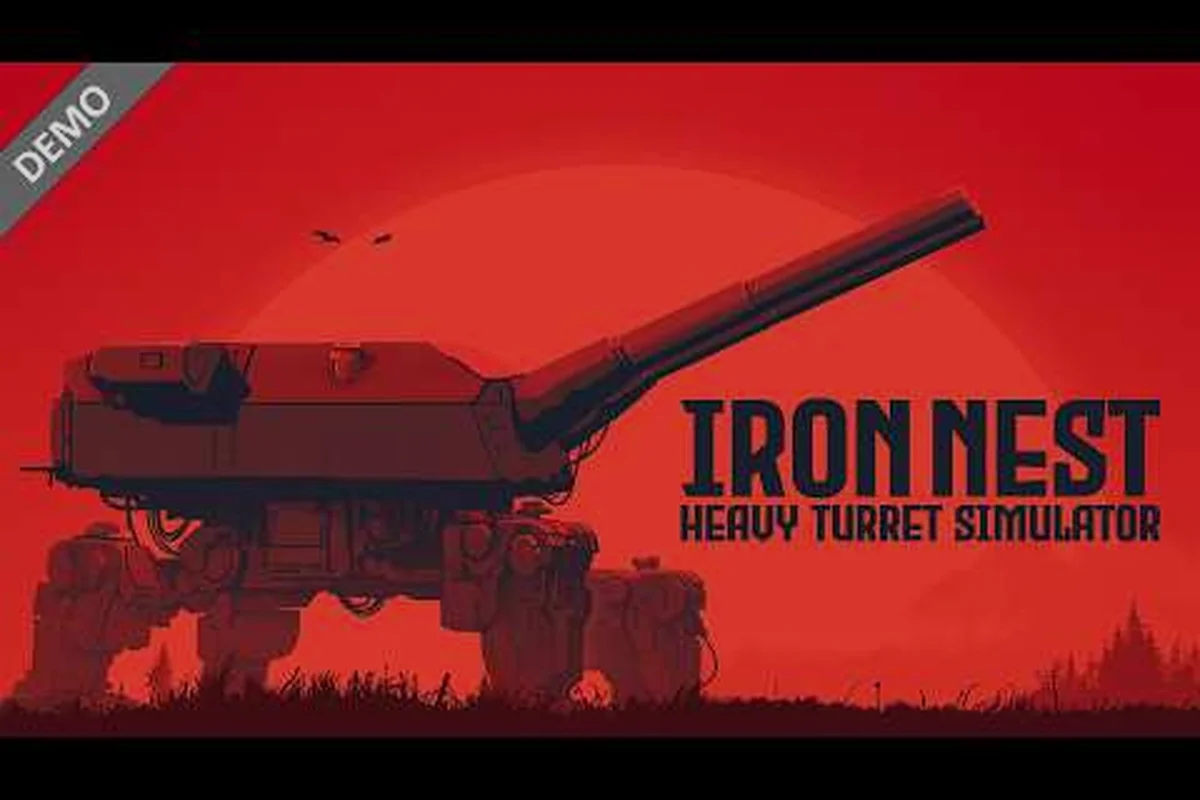
The 5000-ton quadruped turret doesn't care about your conscience, but the moral choices you make between salvos reshape everything that follows. In the game, every shell loaded into the breech carries a quiet question no ballistic calculator can solve: at what cost does a war end? Discover how the Iron Nest morality engine turns each fire mission into a recorded decision that frontline newspapers, allied factions, and post-war tribunals will eventually judge.
How the Moral Choice System Works in Iron Nest
Most artillery simulators treat ethics as decoration, but the game treats moral choices as core mechanics woven into the 1920s alternate-history Spanish theater. Where rival diesel-punk shooters ask only whether you can hit the target, this one asks whether you should. Every dispatch you decode, every ammo crate you authorize, and every surrender you acknowledge feeds a hidden reputation engine that runs beneath the six-step firing loop.
-
Syndicalist Workers' Councils field jury-rigged turrets in the south
-
Walking turrets emerged from 1920s mechanization and diesel-punk engineering
-
The newspaper consequence system tracks every obeyed or defied order
-
Chemical weapon use triggers escalating press coverage and morale shifts
-
The 1923 Primo de Rivera coup is the divergence point for the alternate timeline
-
Three industrial-political blocs replaced traditional party politics
-
The Royalist Directorate controls Madrid and central Castilian territories
-
The moral choice system tracks each decision as a weighted flag rather than a binary good-evil score
-
Teleprinter orders arrive with authentic period formatting that disguises the moral weight of each instruction until the crew reads carefully
-
Defying a direct order may improve civilian outcomes but risks court-martial consequences in subsequent mission briefings
The system operates on three interconnected layers: tactical decisions (which targets to prioritize), resource decisions (which ammunition types to authorize), and command decisions (whether to follow or refuse orders that cross invisible lines). Each layer feeds the same reputation score, which in turn governs how newspaper headlines cover your callsign, which allied factions remain loyal, and which endings become available when the ceasefire sounds.
The Three Pillars of Morality Tracking
| Pillar | What It Tracks | Player Visibility |
|---|---|---|
| Combat Conduct | Civilian casualties, surrendering forces, medical transports | Surfaced in after-action reports |
| Weapons Authorization | Chemical shells, incendiary rounds, banned calibers | Logged in ammo manifest |
| Command Loyalty | Following or refusing orders, reporting misconduct | Tracked through dispatcher tone |
This three-pillar design means you cannot optimize for "good morality" by avoiding one category alone, because your actions across all three feed the same underlying engine. A heroic refusal in one mission can be erased by a careless shell selection in the next, and the Iron Nest morality framework treats such inconsistencies as evidence of either guilt or manipulation.
How Choices Surface During a Fire Mission
Choices rarely appear as obvious dialogue prompts. They arrive embedded in routine artillery workflow: the telegraph machine prints an order that mentions "any means necessary," the tactical map plots a target grid overlapping a marked medical station, or the ballistic calculator spits out a solution that requires a banned caliber. You can ignore these moments and let automation decide, but the system quietly logs the default outcome as your choice.
This passive design is intentional. The game wants players to feel the moral weight during the high-pressure firing loop rather than through standalone cutscenes that break immersion, because diesel-punk commanders in this alternate history didn't pause for ethical debates when shells were inbound.
Key Decision Points and Their Consequences
The moral choices system avoids a simple good-versus-evil meter. Instead, it presents a constellation of branch points scattered across the fifteen war zones, each one staging a scenario where the tactically correct call conflicts with the ethically correct call. Understanding how branch points chain together helps players anticipate consequences long before the next telegram arrives on the wire.
Common Moral Branch Scenarios
| Scenario Type | Tactical Temptation | Ethical Alternative | Reputation Impact |
|---|---|---|---|
| Shelled Village | Strike to clear obstructed sightlines | Hold fire and reposition for indirect fire | Major ethical gain |
| Civilian Convoy | Hit the lead truck to halt the column | Fire warning shots and demand compliance | Moderate ethical gain |
| Surrendering Unit | Eliminate to free the target zone | Accept surrender and call field medics | Minor ethical gain, tactical cost |
| Chemical Depot | Seize all gas shells for your arsenal | Destroy the depot and report coordinates | Major ethical gain |
Each of these scenarios recurs across the campaign in different guises. The surrendering-unit branch alone appears in at least seven zones, and every iteration tests whether your prior reputation carries weight or whether you've already locked in a pattern the system can read.
Why the Choices Aren't Binary
The game refuses to label any single branch as "good" or "evil," because the chemical weapons story arc demonstrates that even a clean conventional record can produce devastating downstream effects. Refusing to authorize a chemical barrage might save enemy civilians but cost your own infantry a sector they cannot hold, and the post-war tribunal in the clean-record ending still notes your complicity in conventional bombardments of occupied towns.
This ambiguity is the point. Players who expect the system to reward pacifism are surprised when their refusal to fire on a surrendering unit triggers an enemy counteroffensive that kills more civilians than the original surrender would have. The Iron Nest morality framework rewards proportional judgment, not absolute restraint, and it punishes players who treat ethics as a checklist rather than a context.
The Chemical Weapons Story Branch
Of every weapons category in the game, the chemical weapons story branch carries the heaviest narrative weight. The game places you in a world where phosgene, chlorine, and mustard variants are considered legitimate artillery tools, and your willingness to authorize them becomes the single most consequential decision arc in the campaign.
When you greenlight a chemical barrage, the immediate effect is tactical: area denial becomes trivial, entrenched positions collapse without costing infantry lives, and the firing loop shortens because you skip several calculation steps designed for conventional rounds. But the system layers consequences in waves, and the first wave hits within a single in-game week.
Chemical Weapon Consequence Timeline
| Time After Use | Immediate Effect | Long-Term Effect |
|---|---|---|
| Same Mission | Massive tactical advantage | Reduced enemy retaliation |
| 3-5 Missions Later | Newspaper coverage shifts hostile | Allies begin questioning orders |
| Mid-Campaign | Specific story branches unlock | Two endings become inaccessible |
| Late-Game | Morale collapses in zones you shelled | Faction relationships locked |
Players who deploy chemical weapons story payloads early often discover their mid-game options collapsing. Certain allied factions refuse further coordination, two of the seven campaign endings require a clean chemical record, and the newspaper reputation engine begins publishing editorials that explicitly name your callsign as a war criminal.
Why Chemical Decisions Carry Heavier Weight
The system treats chemical authorization differently from conventional shelling for narrative reasons that map directly onto the alternate-history setting. While conventional artillery is normalized in this 1920s Spanish theater, chemical weapons remain controversial even among the factions that produce them, which means your authorization creates diplomatic ripples that conventional rounds simply do not.
This asymmetry produces a mechanical payoff: chemical authorization shifts reputation three to four times faster than equivalent conventional decisions, because the system treats it as a signal of either ruthless pragmatism or genuine escalation. Players who want to explore the phosgene story branches without locking themselves out of endings should plan their chemical use around specific zones, not as a general tactical habit.
The mechanics reward consistency, but the system punishes consistency in either direction. If you've built a clean record across the first ten missions and then deploy a single chemical barrage in mission eleven, the reputation hit is proportionally larger than if you'd used chemicals throughout, because the engine interprets sudden ethical shifts as either redemption or collapse, and neither reads well in the post-war tribunals.
Reputation Tracking and War Outcomes
The reputation engine underlying the moral choices system does not operate on a simple point scale. It tracks pattern recognition across three dimensions: consistency, escalation, and proportionality, and these dimensions together determine which narrative arc your campaign follows into the endgame cinematics.
The Pattern Recognition Engine
| Pattern Type | System Interpretation | Ending Access |
|---|---|---|
| Consistent Restraint | Principled operator | Clean record endings (3 variants) |
| Consistent Escalation | Pragmatic veteran | Ends-justify-means endings (2 variants) |
| Inconsistent Shifts | Unreliable commander | Tragic or cursed endings (2 variants) |
| Tactical Proportionality | Calculated professional | Balanced endings (1 variant) |
The cleanest path to the best endings requires maintaining proportional force across all fifteen zones, using chemical weapons only when conventional shells genuinely fail, accepting surrenders when feasible, and refusing orders that explicitly target civilian infrastructure. This doesn't mean pacifism, because the system rewards tactical judgment rather than moral cowardice, and operators who refuse every difficult fire mission trigger the unreliable-commander pattern just as surely as war criminals do.
The 1920s Spain alternate-history backdrop provides essential context for why these choices feel so heavy. The factions you support have committed their own atrocities throughout the campaign, and your refusal to escalate doesn't automatically make you a hero in the eyes of neutral observers. It makes you a different kind of monster in a different faction's newspaper, which the system tracks separately from your primary reputation.
How Factions React to Your Reputation
Each of the three major factions maintains its own reputation tracker that reads your pattern through faction-specific lenses. The Royalist coalition values proportional force and rewards operators who minimize civilian casualties even at tactical cost. The Republican militias prioritize aggressive enemy elimination and tolerate chemical use against fortified positions but punish strikes on surrendered units. The neutral observer press tracks absolute conduct regardless of tactical justification.
These three trackers layer on top of your global reputation, which means the same decision can simultaneously raise one faction score, lower another, and barely shift the third. Players aiming for a specific faction-aligned ending must learn to read which decisions each faction weights most heavily, because the system gives no explicit guidance beyond the newspaper coverage shifts that telegraph major reputation events.
Strategy for Navigating Moral Dilemmas
There is no single optimal path through the moral choices system, but there are strategies that produce more satisfying narrative outcomes than blind reaction. The key is treating each branch point not as an isolated choice but as a chapter in a pattern the system is actively reading, and committing to that pattern once mid-campaign crystallizes your reputation.
Phase-Based Moral Strategy
| Campaign Phase | Recommended Approach | Risk Level |
|---|---|---|
| Early (Zones 1-5) | Establish baseline ethics | Low, patterns not yet locked |
| Mid (Zones 6-10) | Test proportional escalation | Medium, reputation crystallizing |
| Late (Zones 11-15) | Honor your established pattern | High, deviations cost heavily |
In the early campaign, the system gives you the most flexibility because no pattern has been established. This phase rewards careful experimentation: refuse one questionable order, authorize one proportional chemical barrage, observe how the reputation engine responds through newspaper coverage and dispatcher tone shifts. Avoid locking yourself into extreme patterns too early, because both the principled-operator and pragmatic-veteran routes have late-game zones that test your commitment in ways the early game cannot preview.
By mid-campaign, your reputation has likely crystallized into one of the pattern types above, and at this point deviation becomes costly. Players who try to "reform" in mid-campaign often trigger the tragic endings because the system interprets sudden shifts as evidence of either guilt or manipulation. If you've established a consistent restraint pattern, doubling down on that pattern produces more reliable narrative outcomes than a sudden chemical authorization that reads as desperation.
The late campaign is where strategy matters least and pattern matters most. Whatever reputation you've built, you're locked into a logical conclusion. The endings vary in tone and available post-game content, but the system won't let you escape your established narrative arc through last-minute heroism, and players hoping for a redemption arc in zones thirteen through fifteen will find the engine already committed to a different interpretation.
Comparing Moral Choice Outcomes
Different players report different favorite paths through the system, and community testing suggests each path has distinct narrative and mechanical rewards. Here's what operators can expect from each major route, based on aggregated player reports from the Steam community discussions since launch.
Outcome Comparison by Reputation Path
| Path | Best Ending Unlock | Worst Consequence | Playthrough Appeal |
|---|---|---|---|
| Clean Record | Tribunal exoneration scene | Hardest tactical difficulty spikes | Narrative purists |
| Pragmatic Veteran | Negotiated peace ending | Allied faction collapses | Military historians |
| Tragic Arc | Poetic downfall cinematics | Locked post-game content | Completionists |
| Balanced Path | Bittersweet ceasefire | No "perfect" resolution | Realistic players |
Each path carries at least one mechanically unique payoff. The clean-record path unlocks a hidden conventional-shell upgrade that only becomes available if you've never authorized banned calibers, which makes late-game zones noticeably easier once unlocked. The pragmatic path unlocks a command-efficiency bonus that reduces telegraph-processing time across the tactical map, shaving seconds off every fire mission. The tragic arc locks you out of two zones entirely in your second playthrough, but rewards the sacrifice with the longest post-credits sequence in the game.
The Iron Nest morality system doesn't punish players who pick any particular path. It punishes players who don't engage with the choices at all, and skipping branch points through reflex optimization produces the most unsatisfying outcomes regardless of tactical performance. Operators who want to explore multiple paths should consult the chemical weapons gameplay guide before committing to a second campaign, because the resource-decision layer interacts with reputation in ways that first-time players often miss.
Frequently Asked Questions
Do moral choices affect gameplay difficulty in the game?
Yes, though not always in the direction players expect. A clean record increases enemy aggression in later zones because you become a high-priority target, while a pragmatic reputation reduces some encounters because factions decide you're not worth the political cost of engagement. Difficulty scaling tracks your reputation, not just your mission count.
Can you reset your moral reputation mid-campaign?
No respec exists. The reputation engine treats mid-campaign shifts as evidence of either guilt-driven reform or manipulative calculation, and both patterns lock you into tragic endings. Players who want a clean second playthrough must start a fresh campaign and commit to a consistent pattern from zone one.
Is there a "best" moral path through the chemical weapons story?
Community testing suggests the proportional path produces the most nuanced narrative, but no path is objectively superior. The clean-record path is the hardest tactically, while the pragmatic path sacrifices ally relationships for operational efficiency. Players should pick the path that matches their preferred narrative tone rather than chasing a "correct" answer.
How does the newspaper system interact with moral choices?
The newspaper reputation engine reads your pattern and publishes editorials accordingly. Clean-record operators see sympathetic coverage, pragmatic players see pragmatic coverage, and inconsistent players see contradictory coverage that itself becomes a plot point in the late campaign. Major reputation events trigger front-page headlines that telegraph which direction your pattern is heading.
Are moral choices permanent across save files?
Each campaign maintains its own reputation, but your global account tracks which endings you've unlocked. This means you can pursue multiple paths across different saves without losing access to any ending variants, provided you commit to each playthrough's pattern rather than trying to game the system through save-scumming.